
This article was written by: Tuwe Pamoja Academic Lead in Nairobi Bessy Kathambi, from the University of Nairobi
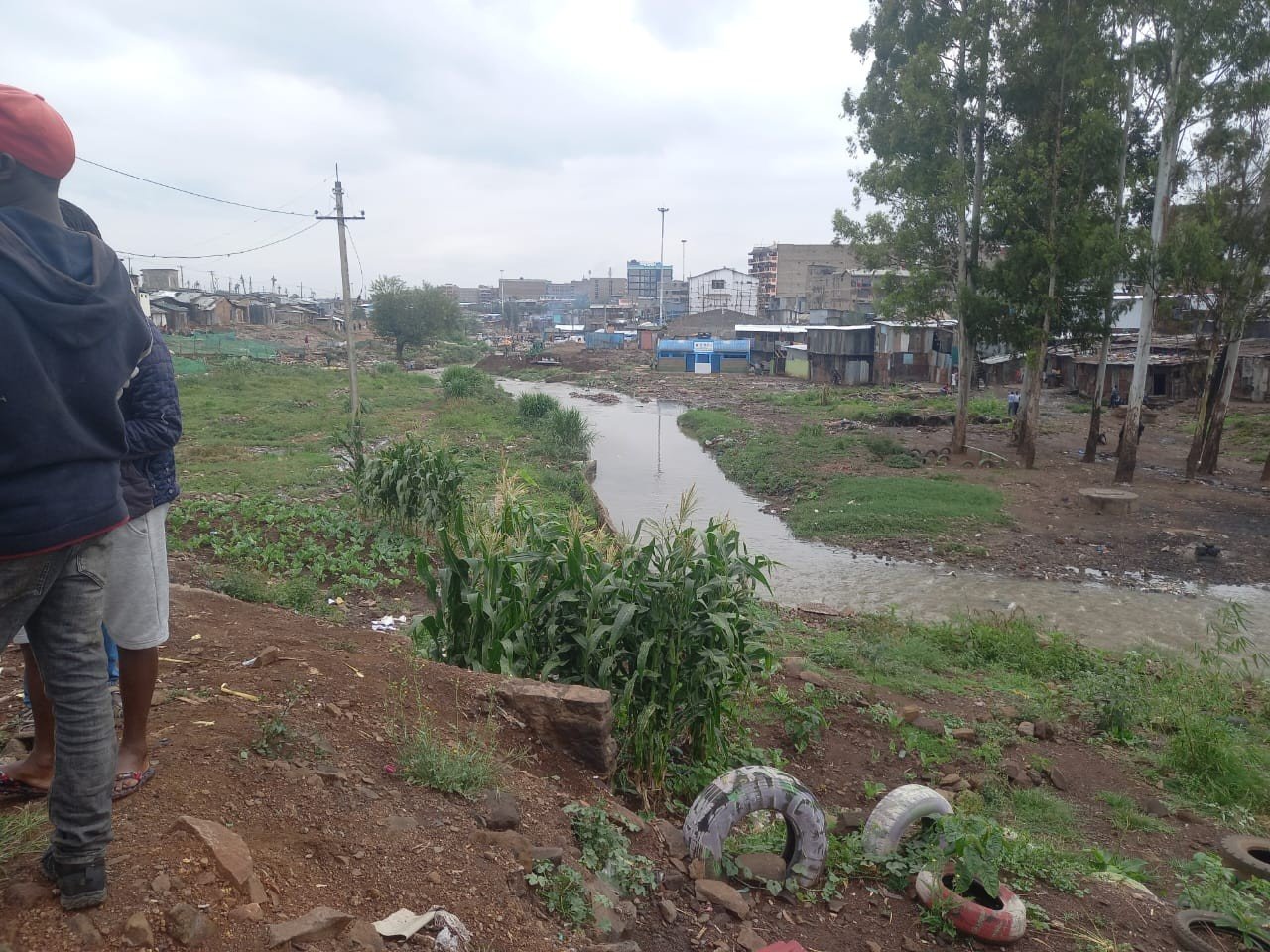
Mathare informal settlement in Nairobi, Kenya, faces severe flooding due to climate change. Heavy rains leave its 650,000 households damaged, and disrupt residents’ livelihoods. For many, the floods signal a familiar crisis, prompting community-led action supported by the Tuwe Pamoja initiative.
Tuwe Pamoja, funded by the global CLARE programme, bridges climate science and local needs by supporting co-designed and inclusive nature-based solutions (NbS), such as riverbank stabilisation and green spaces.
Partnering with academic institutions including the Universities of Nairobi, Ghana and Cape Town, and working closely with Slum Dwellers International (SDI) affiliates and urban settlement residents, the project ensures adaptation is collaborative.
In Nairobi specifically, Tuwe Pamoja aims to empower the various city actors to incorporate nature-based solutions in policy and planning around increasing climate resilience.
Stories that inform action
Art-based engagement ensures marginalised voices are represented, translating climate data into relatable stories that can inform action.
Tuwe Pamoja engages Mathare residents using art-based methods, as well as participatory mapping and profiling tools. Data collected in these engagements indicate that the settlement’s residents highlight heat corridors and flood risks as areas needing urgent action.
Evidence from focus groups held by the Tuwe team shows that vulnerability in Mathare varies by age and gender, and generic solutions miss these nuances. It also shows that efforts to improve resilience against erosion are effective when driven by community efforts, including activities like debris removal and vetiver grass planting, organised clean-ups, and waste recycling for urban farms.
Building on this, Tuwe Pamoja works to support capacity building among residents, academics, and local decision makers on how to integrate waste management, clean energy, and land tenure with climate planning to promote economic empowerment and resilience.
Supporting nature-based solutions
Inaction proves costlier than adaptation in the Mathare community. Floods damage small businesses and deepen poverty. However, greening and nature-based activities can safeguard productivity and support Nairobi’s informal economy.
Indeed, surveys carried out by Tuwe Pamoja project partner SDI indicate over 70% of Mathare residents would support greening if connected to real benefits like food security or income from waste.
These nature-based activities include youth-led river restoration and the creation of public spaces like Wangari Maathai Park.
By strengthening the capacities or planning and implementing nature-based activities in Mathare, Tuwe Pamoja centres the voices of settlement residents while building climate resilience and protecting livelihoods.
Supporting economic growth
In Kenya, research shows the informal economy employs five times more workers than the formal economy, and is responsible for an estimated 24% of the country’s GDP. Across Africa, eight out of 10 workers across the continent are in informal employment.
This evidence brief on adaptation as an enabler of development and growth, from the CLARE programme, reveals that supporting resilience in this sector can directly contribute to national economic growth, while safeguarding community livelihoods, social mobility and well-being.
“Despite the vulnerability of these jobs to extreme events such as flooding, heatwaves and drought, Tuwe Pamoja shows that informal initiatives – greening riverine ecosystems, waste management, and greening open spaces – enable economic empowerment,” the brief says.
“Often led by youth and women groups, who dominate many parts of the informal sector, these nature-based activities are tailored to the way informal economies actually function to strengthen productivity and reduce exposure to climate risks."