
Collaborative insights from Accra: Reimagining Glefe with nature-based solutions
This article was written by Tuwe Pamoja Academic Lead in Accra Professor Irene Appeaning Addo, from the University of Ghana
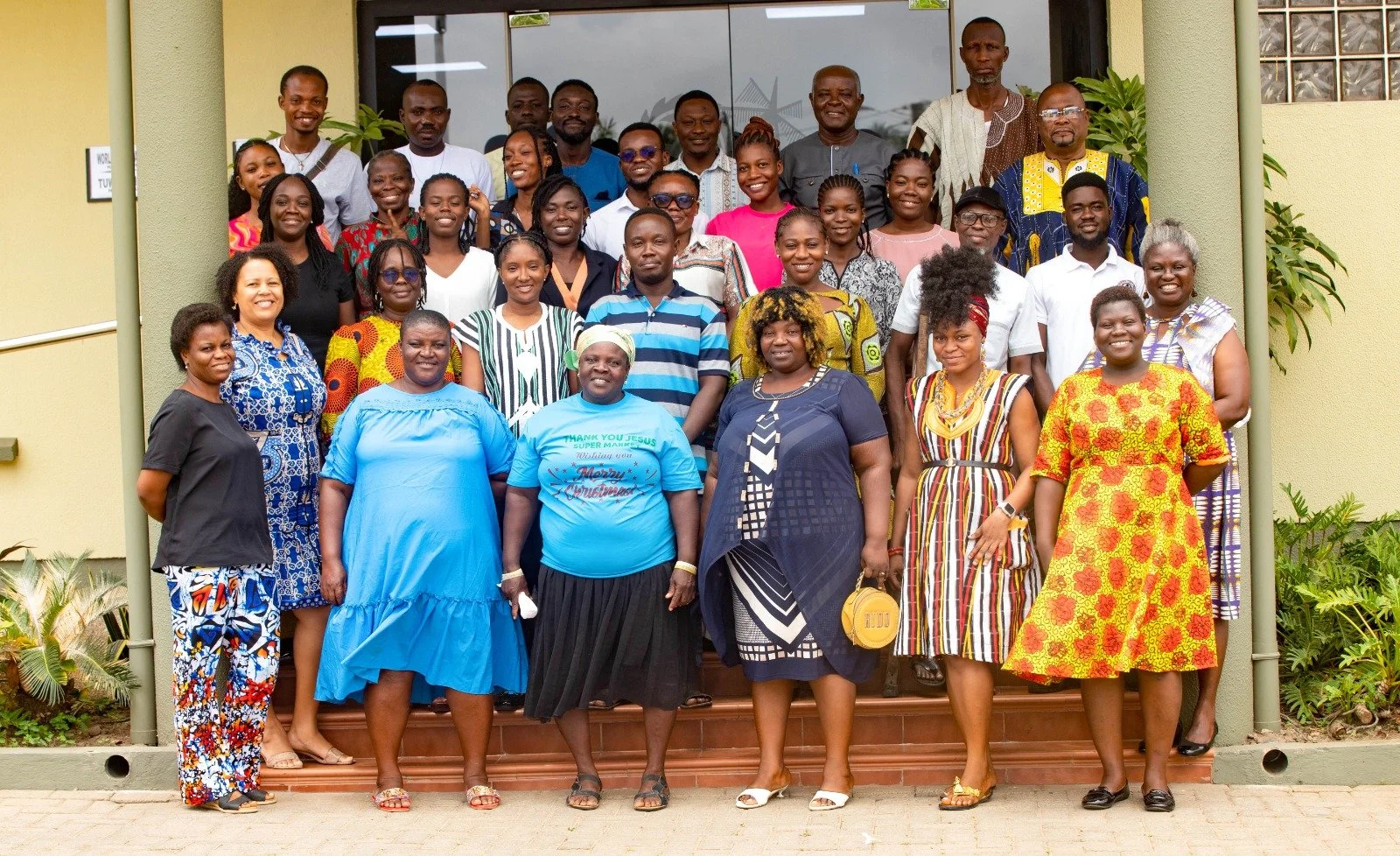
Local researchers, NGOs, community leaders and government officials participated in a workshop exploring climate hazards in the coastal township of Glefe, Accra held by Tuwe Pamoja and its partners.
Understanding climate vulnerability requires more than observation. It requires deliberate engagement with the people most affected and the systems that shape their realities.
The Tuwe Pamoja project’s work in Glefe, an urban coastal community in Accra, Ghana, combines field-based learning, community interviews, and stakeholder dialogue to develop a more grounded and inclusive understanding of climate risks and responses.
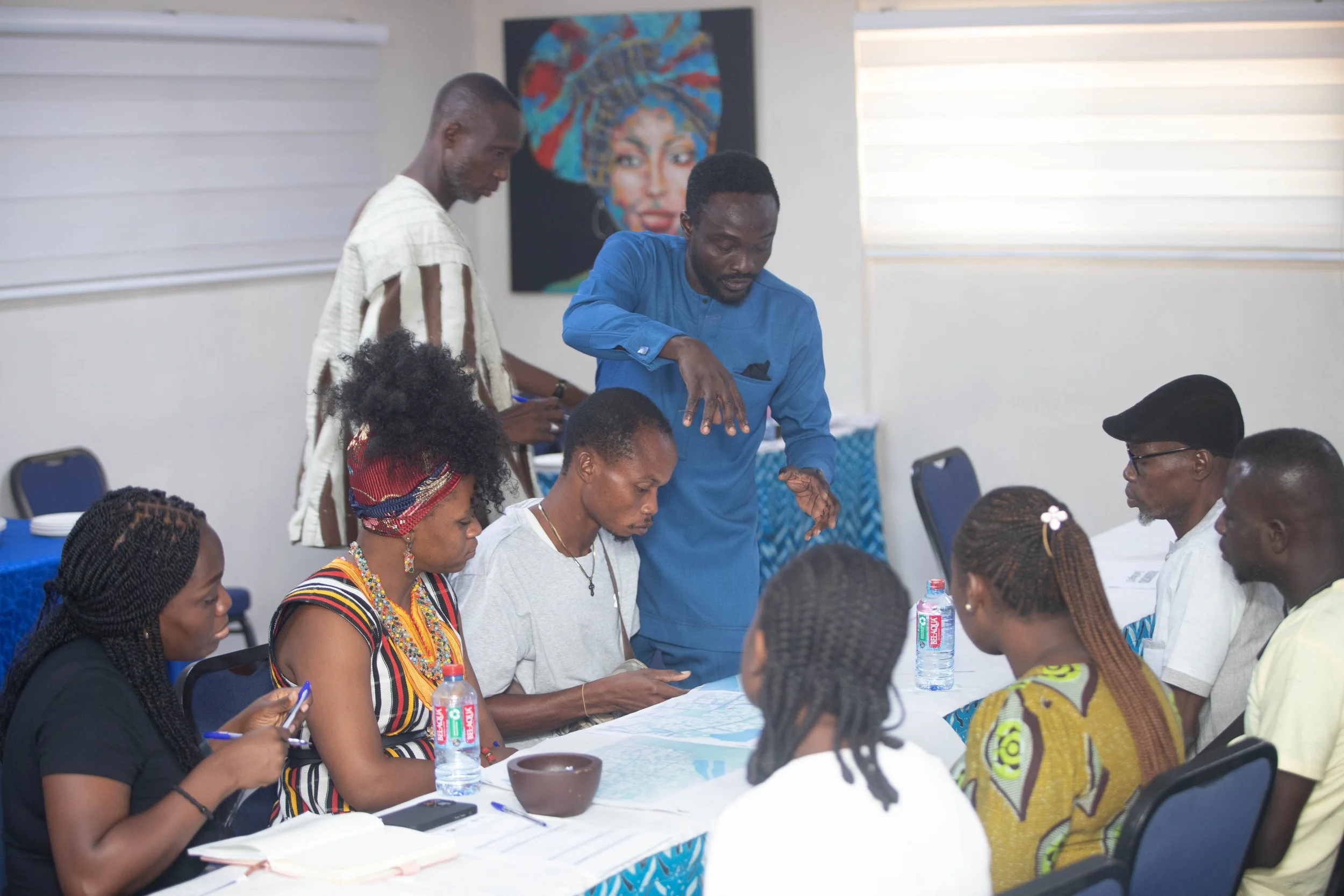
These activities were introduced to local researchers, NGOs, community leaders and government officials in a workshop exploring the prevailing climate hazards in Glefe, the interventions necessary for developing climate resilience in Glefe, and how to use a climate resilient development pathways (CRDPs) approach.
Environmental challenges made visible
The workshop began with a presentation on ‘stories from the community’. This activity highlighted environmental and climate-related challenges identified by the community during a transect walk with residents and complemented with focus group discussions.
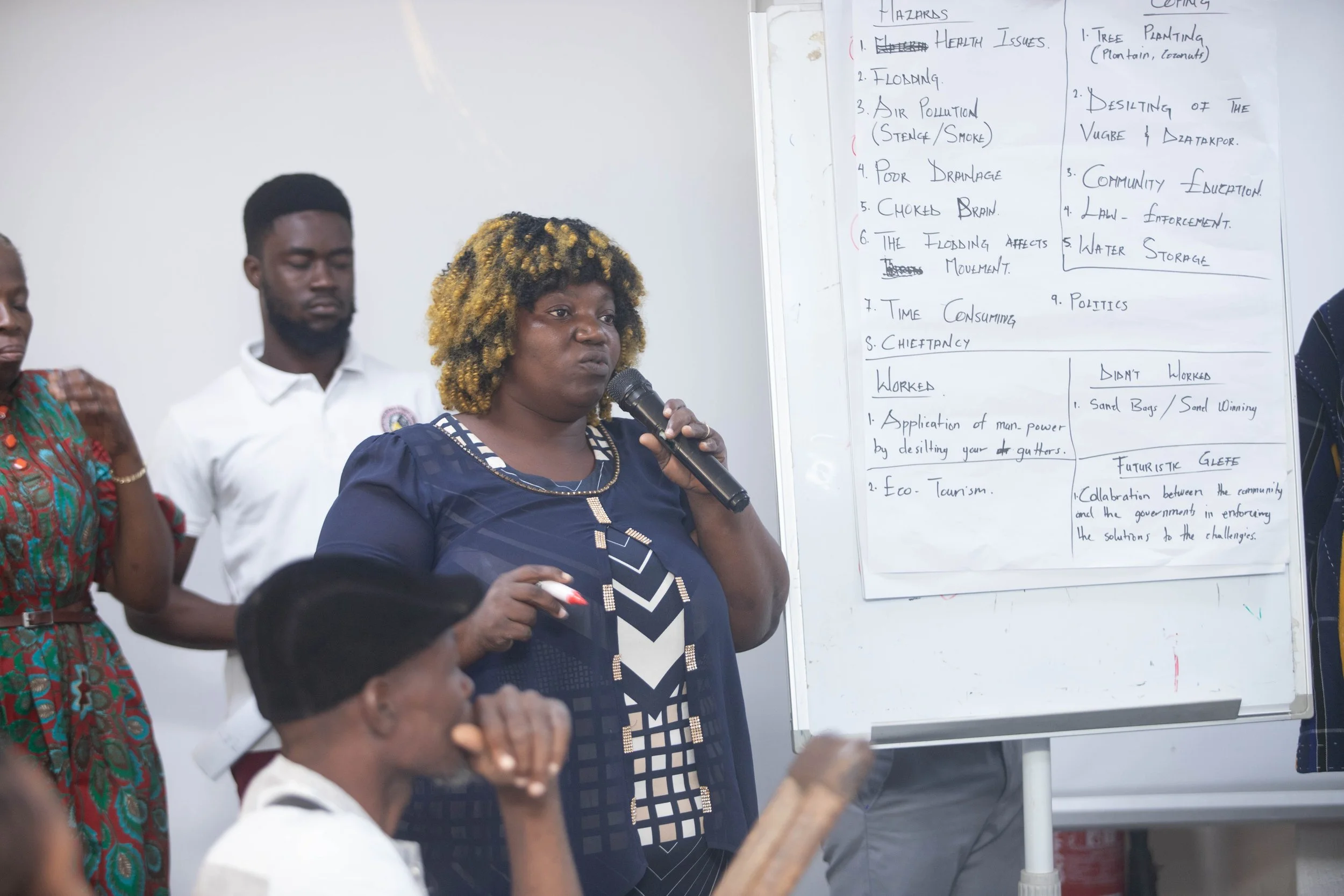
Flooding emerged as the most prevalent and widely acknowledged environmental hazard, caused primarily by choked gutters and silted lagoons. Participants noted that all residents are affected by flooding, regardless of whether water physically enters their homes. Stagnant floodwaters, for example, result in the breeding of mosquitoes with associated health challenges.
Participants recounted severe incidents in which children had to be physically lifted out of floodwaters inside their homes. Flooding was also noted as a contributor to disruptions to education and livelihoods.
The participants identified poor solid waste management as the second most prominent concern. A large, informal dump site sits within the community near the Dzatakpo lagoon. One community member described the uncontrolled waste situation with the phrase: "The two lagoons are crying."
The dump site emits foul odours and smoke from the periodic burning of refuse. The waste has degraded the environment and filled up the lagoons, directly contributing to flooding.
The dump site, however, has become a source of livelihood for some community members. Tricycle operators transport refuse to the site. Waste pickers segregate recyclable plastics. This economic dimension has made efforts to control or eliminate the practice of dumping waste particularly challenging. Local government has been met with resistance, including threats of violence. Children skip going to school so that they can scavenge to make some money.
Participants identified other challenges including poor road network, unreliable electricity supply, poor drainage infrastructure, extreme heat and continuous burning of refuse at the dump site.
Besides all these challenges, participants also pointed out traditional governance issues with two chiefs claiming jurisdiction over the community. Above all, the greatest setback to achieve sustainable solutions was the political situation where new governments take over and local government officials are changed almost all the time.
Community-led insights
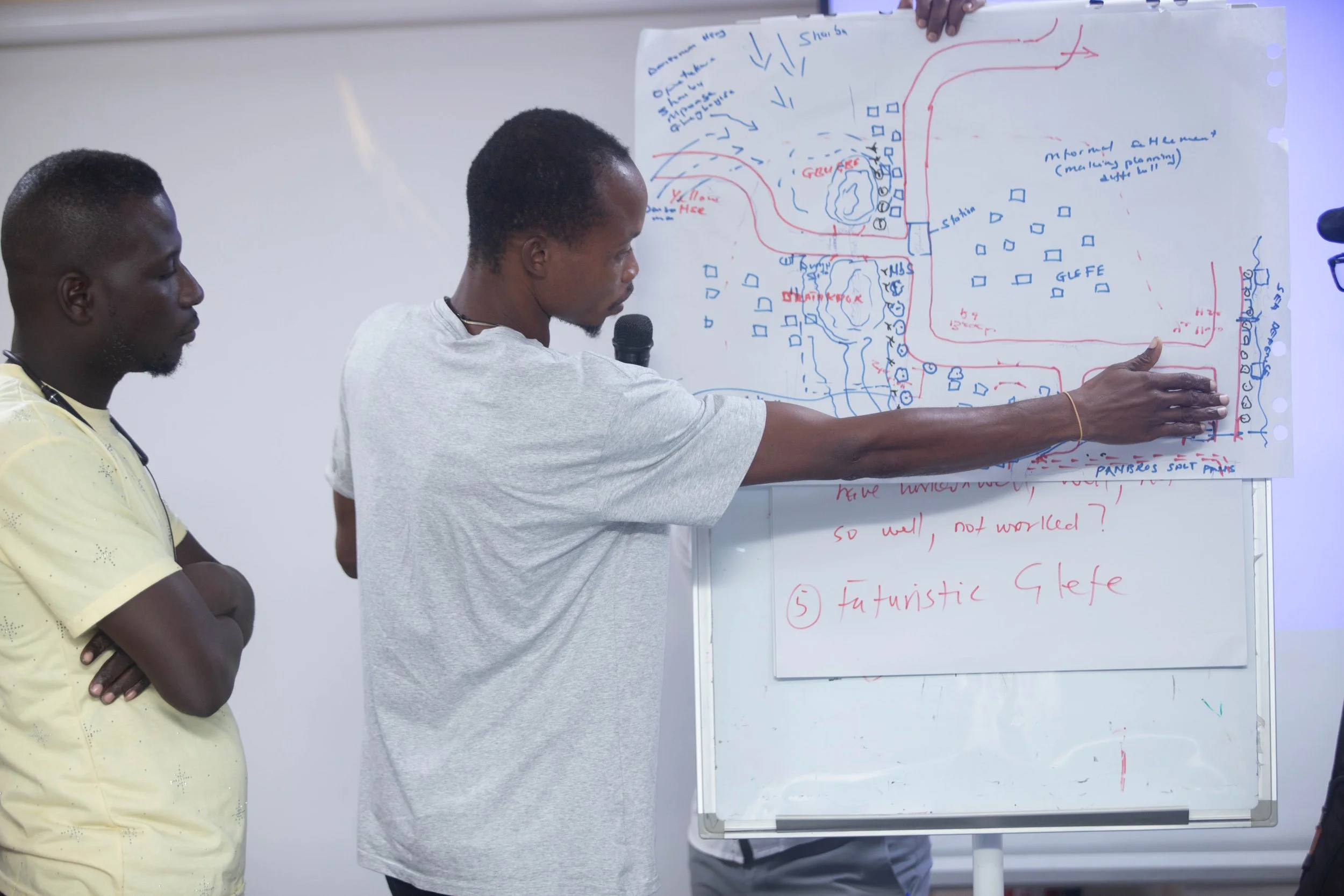
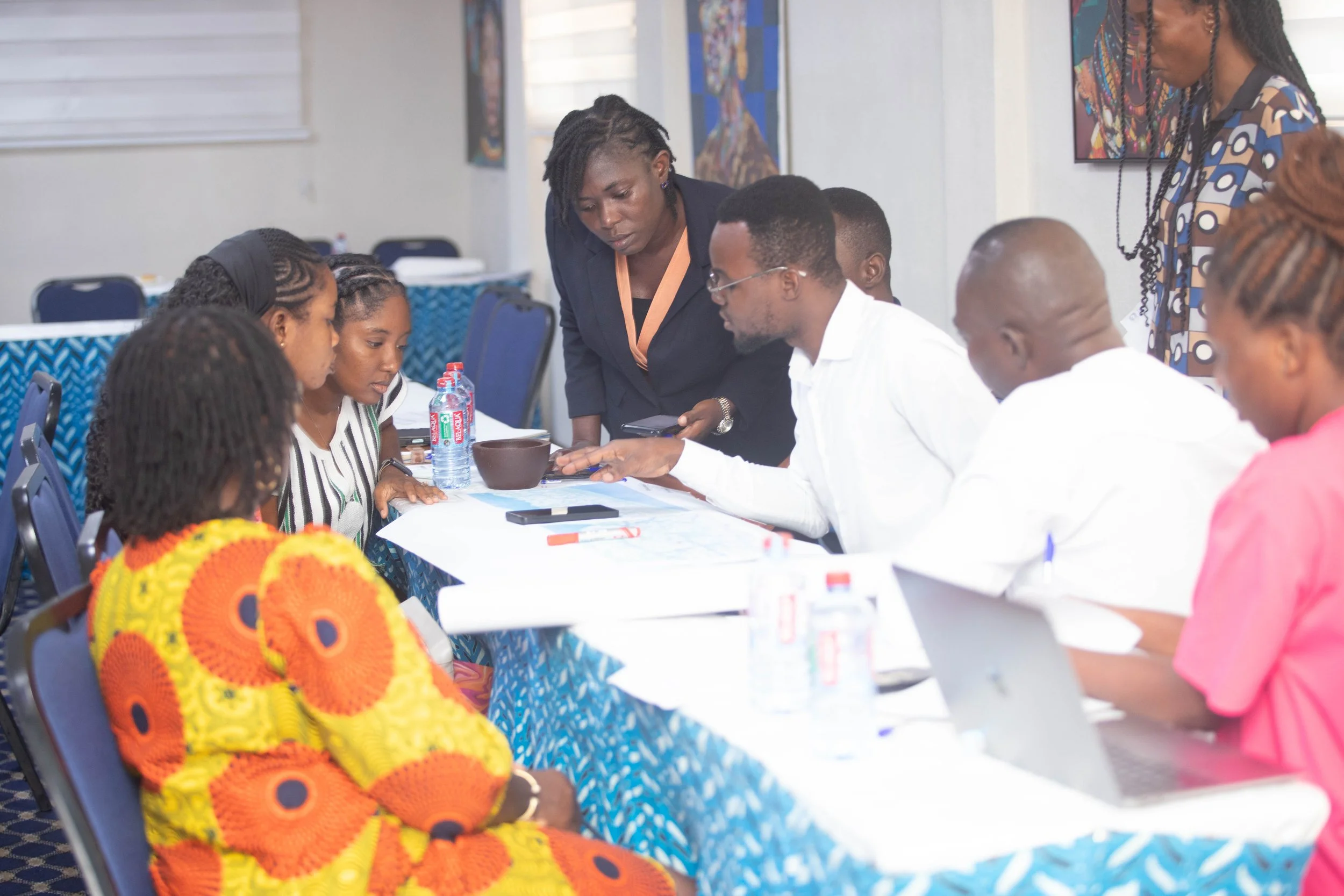
A breakout session was held during the workshop, where participants were asked to identify the two main lagoons in the community. These lagoons, the Djatakpo Lagoon and Gbogbe Lagoon, were then used as reference points.
Participants were then asked to identify the various localities within Glefe - Yellow House, the main Glefe station, the transformer area, Tramol Junction, Dumpsite, and Sweet Mother, among others. These served as reference points for locating hazards in the community.
Participants then discussed the existing coping strategies adopted by the households and their impact on livelihoods, infrastructure, and everyday lived experiences. Some of the existing strategies included the use of sandbags, sand filling and construction of short walls to manage house flooding. People have placed their belongings on high tables to prevent them from being destroyed when flood waters enter the rooms. Other community members have taken it upon themselves to desilt the drains before the rainy season. If flooding is severe, people temporarily relocate from their houses.
In assessing the effectiveness of these strategies, participants suggested that sandbags and short walls as flood prevention strategies have not worked well. However, regular desilting of the drains was effective in managing flooding in the community
Co-creating pathways toward resilience
The workshop also convened in a plenary for an open question-and-answer session. This segment provided an opportunity for all participants to seek clarification on presentations, interrogate proposed solutions, and collectively reflect on the way forward.
The discussions touched on technical, governance, cultural, financial, and policy dimensions of the environmental challenges facing the community. They were guided by a set of questions focusing on the absence of nature-based solutions in the community, and the understanding of ecotourism as a future economic development for Glefe.
Also discussed were stakeholder strategies to deal with trade-offs involved in proposed interventions, the community’s perspective on cultural and spiritual interventions in managing climate challenges, the participants perspectives on municipal financing, institutional frameworks, implementation of bylaws and regulations.
At the plenary, the planning officer from the municipal assembly revealed that there were plans to undertake dredging in the lagoon, and that approximately 32 households were likely to be affected by land acquisition requirements.
No plans or commitments regarding resettlement or compensation for affected residents had been made, however, the community and city officials agreed that a condominium could accommodate more households and free the land space for proper drainage management.
At the end of the plenary, all stakeholders agreed on some pathways to achieving sustainable solutions to the periodic flooding in the community. This included clearing of water ways and drains from rubbish, desilting the lagoons to allow free flow of water to the sea.
Such interventions were suggested as valuable for inclusion in the municipality’s annual budget and should be implemented incrementally. Again, it was mentioned that the municipality could establish partnerships with the Forestry Commission to begin tree planting and mangrove restoration efforts along the lagoon. This intervention would require very little financial commitment.
With clean and green lagoons, participants highlighted the potential for ecotourism offerings, including and corresponding economic development in Glefe. It was agreed that the local government officials should view the community as partners in the development of Glefe.
However, the officials encouraged community members to take the initiative and demonstrate commitment to the change they wish to see by organising and participating in national clean-up exercises, and town hall meetings. In turn, the officials would be in a stronger position to mobilise equipment, resources, and technical support to back community-driven efforts.
This exchange pointed to the importance of a genuine partnership model between the community and the Assembly. Neither party should wait passively for the other to act. Both should engage proactively and reinforce each other's efforts.
Ambitious but possible future for Glefe
Lastly, the participants painted a ‘Futuristic Glefe’, where the lagoons will be desilted, the waste dumps will be cleared, and drainage infrastructure will improve. They also envisioned the lagoons in Glefe turned into ecotourism parks that serve as a source of employment for the community through a public-private venture that benefits the community.
Participants imagined a better future for Glefe in which chiefs, government, and community members work together to achieve the desired visions for the community. They shared their belief that strong collaboration could make it possible to enforce laws that address local problems.