
New research evaluates EbA in South Africa’s freshwater systems
Ecosystem-based Adaptation (EbA), or the use of biodiversity and ecosystem services to help people adapt to the adverse effects of climate change, is increasingly recognised as a vital strategy for building climate resilience. However, evaluating how effectively these interventions perform in real-world scenarios remains a complex challenge.
In a systematic review published in the journal Nature-Based Solutions, lead author Dr Chipo Mungenge, from the People in Nature & Climate (PiNC) Lab at the African Climate and Development Initiative (ACDI), alongside Lab Lead Dr Petra Holden and colleagues, evaluated the evidence base for EbA interventions across South Africa’s freshwater ecosystems.
The synthesis shows that while EbA holds demonstrable potential to reduce climate vulnerability, improve ecological conditions, and deliver local socioeconomic co-benefits, critical knowledge and monitoring gaps must be addressed to maximise its impact.
"Our findings highlight the need for more robust, long-term, and interdisciplinary research to strengthen the evidence base for EbA in South Africa’s freshwater ecosystems,” says Mungenge.
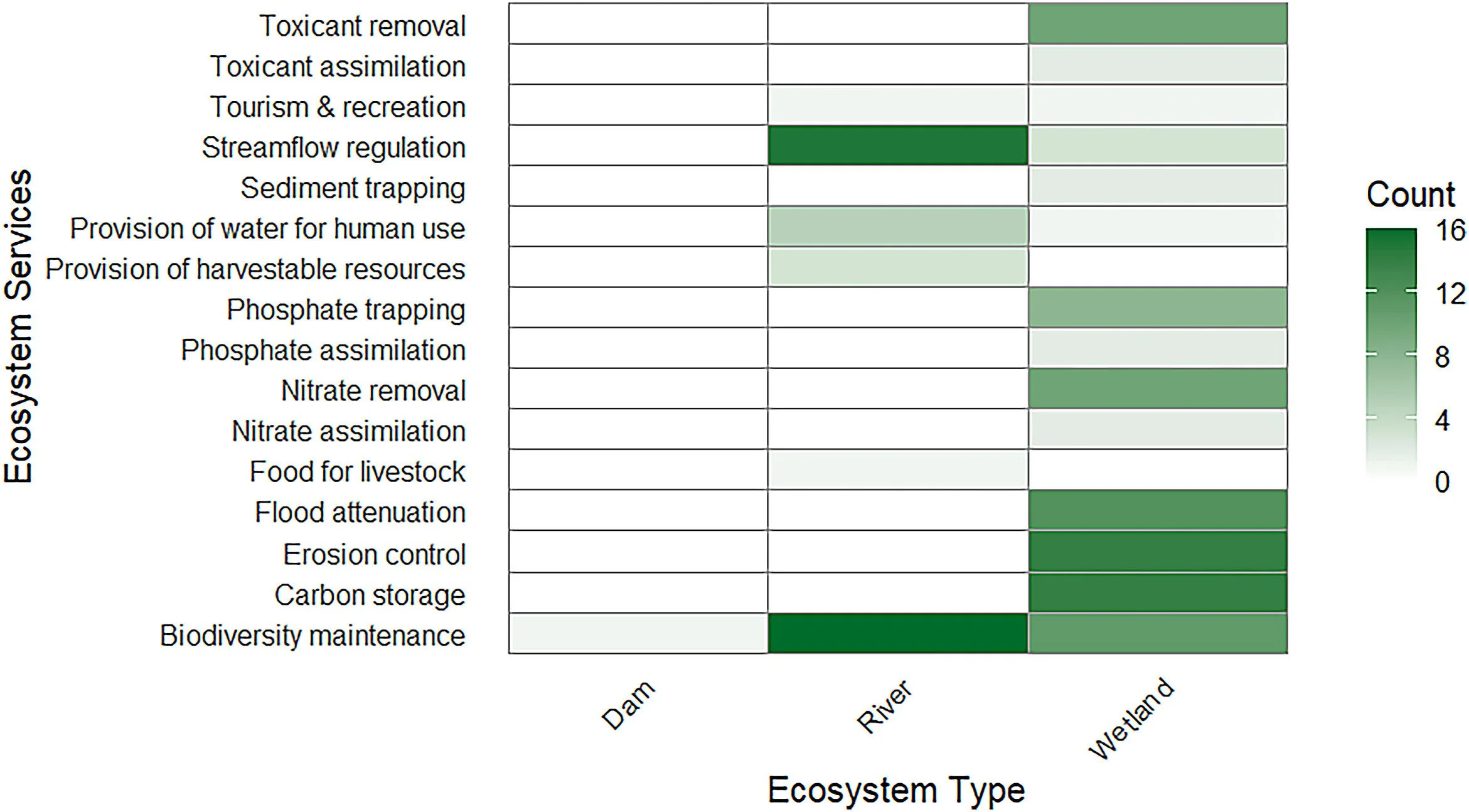
Heatmap illustrating the frequency of ecosystem services provided by EbA interventions across different freshwater ecosystem types. Darker shades indicate higher frequencies, highlighting the extent to which specific ecosystem services are associated with particular ecosystem types.
Impacts of freshwater EbA interventions
By systematically analysing peer-reviewed literature, the research team evaluated the impacts of freshwater EbA interventions on both ecosystems and communities, while identifying key barriers to widespread implementation:
They found that interventions across various freshwater systems consistently demonstrated positive contributions to essential ecosystem services, including streamflow regulation and biodiversity maintenance.
The synthesis also revealed that poorly designed interventions sometimes can lead to unintended negative consequences for both the ecosystem and communities and, drawing attention to the fact that nature-based approaches require careful, context-specific planning.
However, the researchers identified scarce direct peer-reviewed evidence explicitly linking EbA interventions to specific climate hazards. Similarly, there was limited empirical data available to link projects to clear socio-economic benefits.
This was attributed to a lack of standardised post-implementation assessment methods and indicators, says Mungenge.
“Without consistent metrics, it is difficult to evaluate long-term success, compare outcomes across different projects, or translate findings into actionable policy guidance,” she says.
Unlocking the Full Potential of EbA
While EbA offers key long-term benefits, this review emphasises that interventions must be embedded within well-structured, adequately resourced, and context-specific programmes that integrate ecological, social, and economic dimensions of resilience simultaneously.
“Addressing research and policy gaps will be vital to ensuring that national frameworks explicitly support and integrate EbA as a core, evidence-backed component of South Africa’s climate adaptation strategy,” says Mungenge.
Citation:
Chipo P. Mungenge, Petra Holden, Nancy Job, Graham von Maltitz, Effectiveness of Ecosystem-based Adaptation in South Africa’s freshwater ecosystems: A systematic review, Nature-Based Solutions, Volume 10, 2026, 100366, ISSN 2772-4115, https://doi.org/10.1016/j.nbsj.2026.100366.