
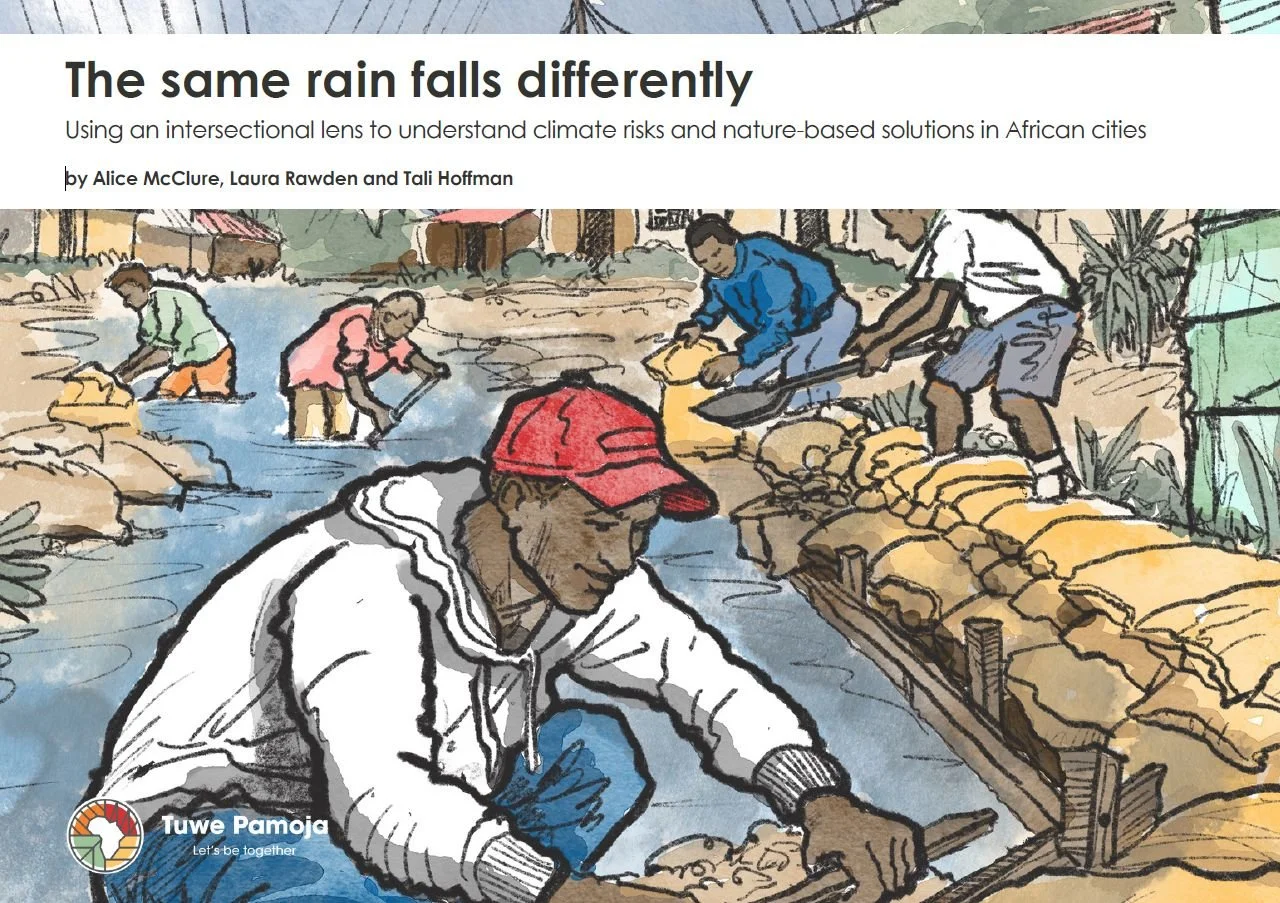
Flooding in informal settlements affects whole communities. But it does not affect everyone in the same way. The same rising water, the same green intervention, the same early warning system can mean very different things depending on your age, your gender, how long you have lived there, and whether or not you have neighbours you can call on.
These differences are not random. They are shaped by the ways that social, economic, and political systems distribute risk and opportunity. Making sense of these differences requires looking through more than one lens.
The Tuwe Pamoja project is using all three lenses, integrating intersectional thinking into research on nature-based solutions and climate-resilient development in African cities.
In the four stories that are described in this flipbook, we illustrate what these lenses help us see: four people, the same settlement, the same flood, four very different experiences of risk and resilience, and the limits of even well-intentioned interventions. We then describe actions that you can take to better understand intersectionality and climate risk in your city
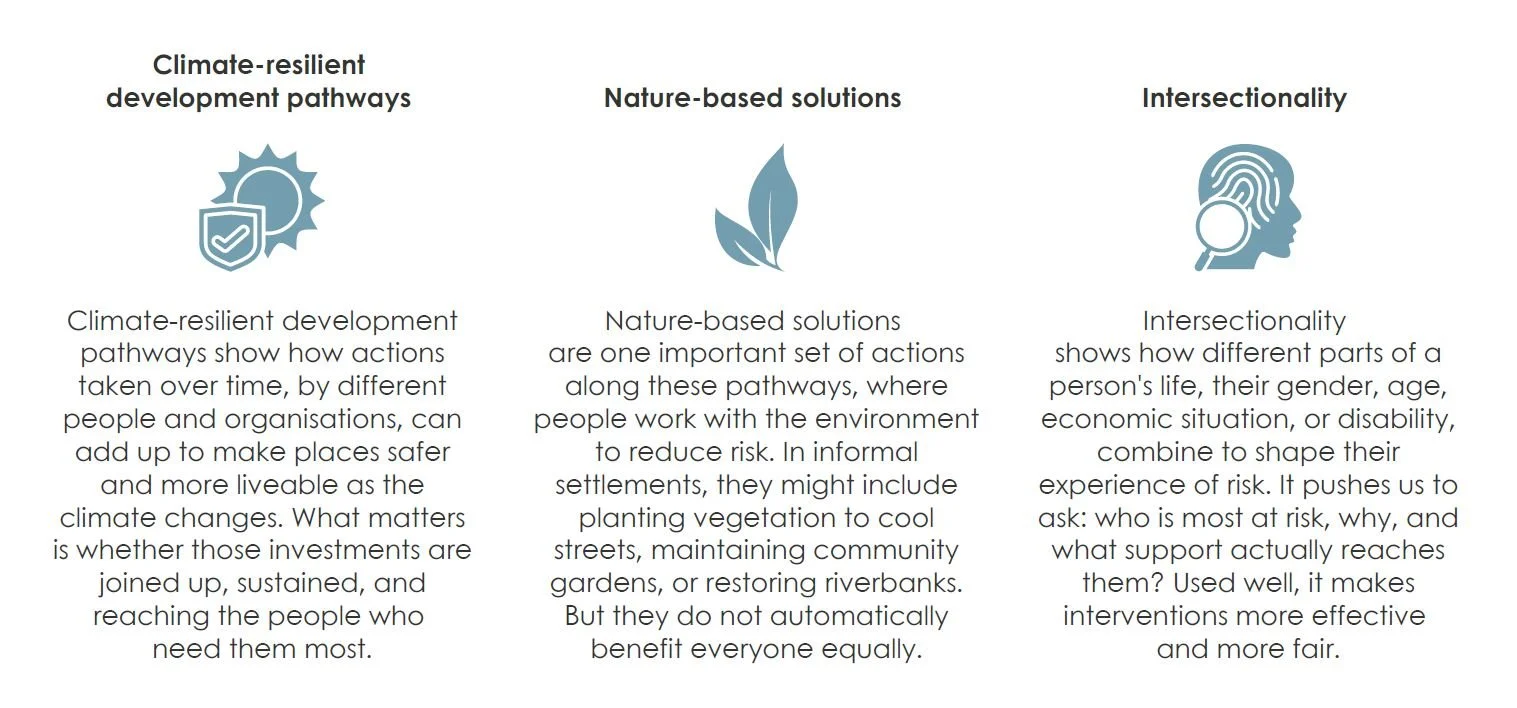
The Tuwe Pamoja project integrates intersectional thinking into research on nature-based solutions and climate-resilient development. The goal is to ensure that evidence about what works, and for whom, is grounded in the realities of those most affected.
The four fictional stories in this publication emerged from focus group discussions with residents of informal settlements in Accra, Cape Town, Lusaka, and Nairobi. They are not verbatim accounts, but composite narratives woven from insights across different phases and activities of the project. The stories were specifically crafted to illustrate different dimensions and experiences of climate risk and nature-based solutions.
Download the Flipbook here.
Reference:
McClure, Alice; Rawden, Laura; Hoffman, Tali (2026). Storybook: Integrating intersectional thinking into research on nature-based solutions in African cities. University of Cape Town. Educational resource. https://doi.org/10.25375/uct.33475366.v1 (DOI)