
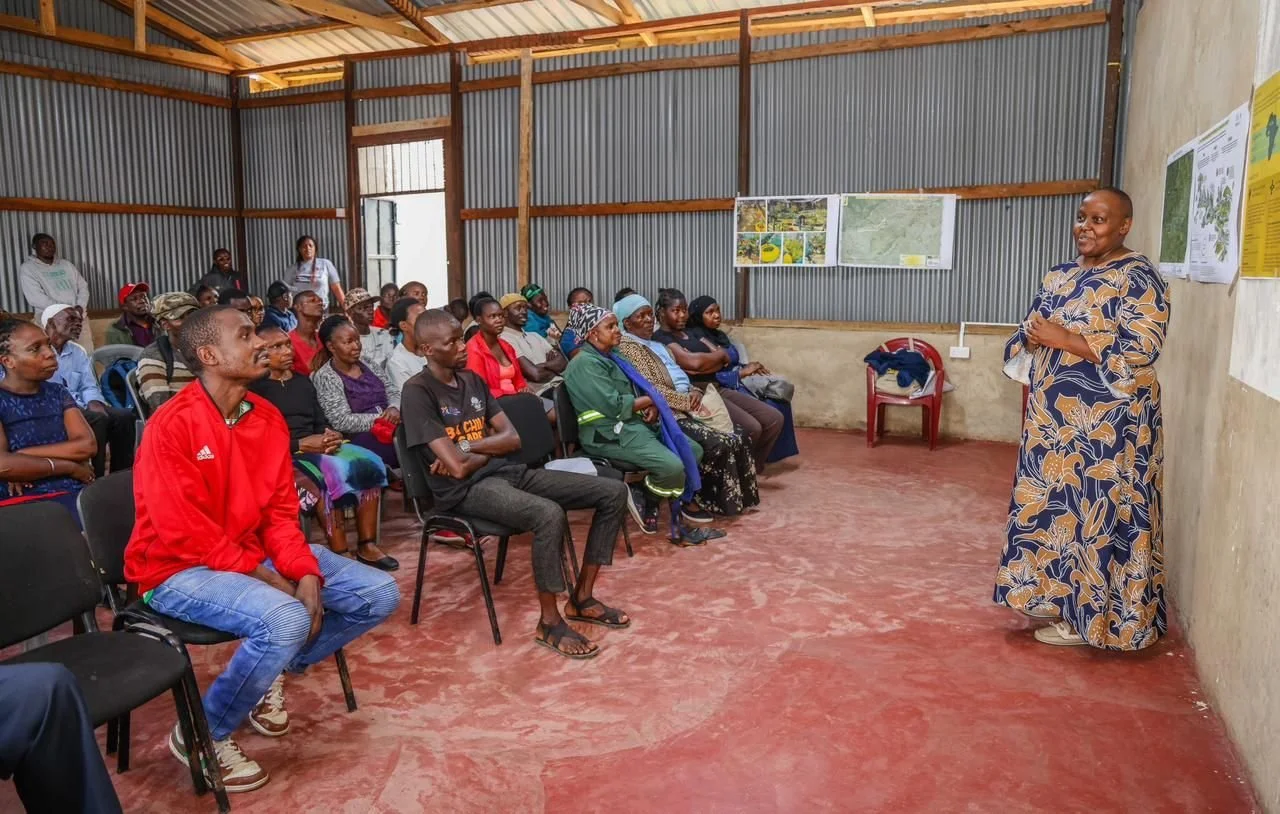
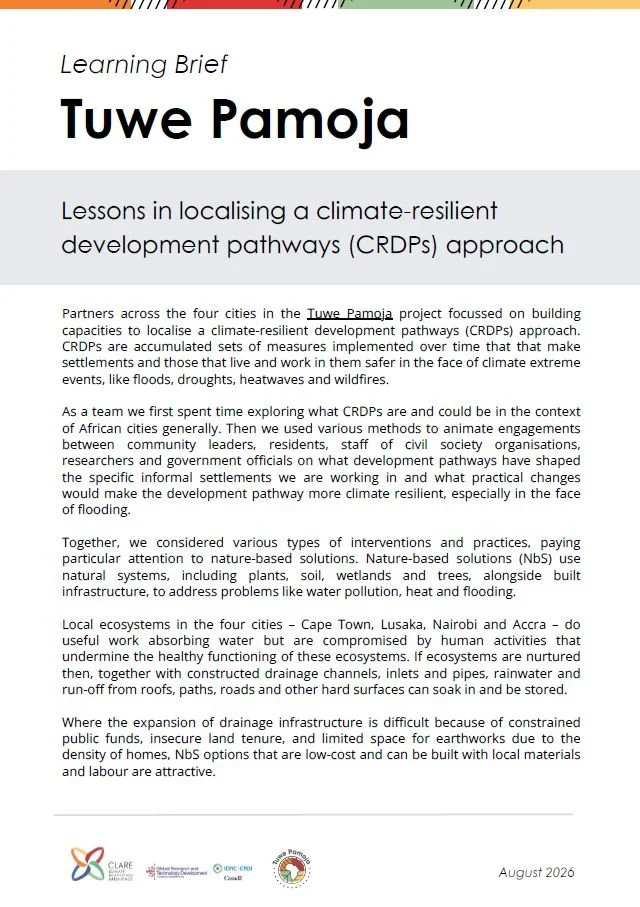
Partners across the four cities in the Tuwe Pamoja project have focussed on building capacities to localise a climate-resilient development pathways (CRDPs) approach.
CRDPs are accumulated sets of measures implemented over time that that make settlements and those that live and work in them safer in the face of climate extreme events, like floods, droughts, heatwaves and wildfires.
Between October 2025 and May 2026, the Tuwe Pamoja teams in Cape Town, Lusaka, Nairobi and Accra hosted engagements about the development pathways of the focal settlements.
The teams explored what makes these settlements more or less climate resilient, what nature-based solutions (NbS) might reduce flood impacts, and how these NbS interventions interplay with other interventions and practices that influence flooding impacts.
This learning brief shares how we used various methods to animate engagements between community leaders, residents, staff of civil society organisations, researchers and government officials on what development pathways have shaped the specific informal settlements we are working in and what practical changes would make the development pathway more climate resilient, especially in the face of flooding.
Together, we considered various types of interventions and practices, paying particular attention to nature-based solutions. We share five emerging lessons:
Lesson 1: Take an integrated view on climate risk
Lesson 2: Link environmental and socio-economic benefits
Lesson 3: Make connections meaningful
Lesson 4: Understand local realities and perspectives
Lesson 5: Complex responses require enrolment and deepening relations
Explore the learning brief in full here.
Reference
Taylor, Anna; Ziervogel, Gina; Appeaning Addo, Irene; Agyemang, Frederick; Siame, Gilbert; Chipampata, Musonda; et al. (2026). Lessons in localising a climate-resilient development pathways (CRDPs) approach. University of Cape Town. Educational resource. https://doi.org/10.25375/uct.33868342.v1