
CBA20: Examining nature-based solutions as climate action
This article was written by: Dr Martha Sibanda, Tuwe Pamoja Network Lead from Slum Dwellers International (SDI)
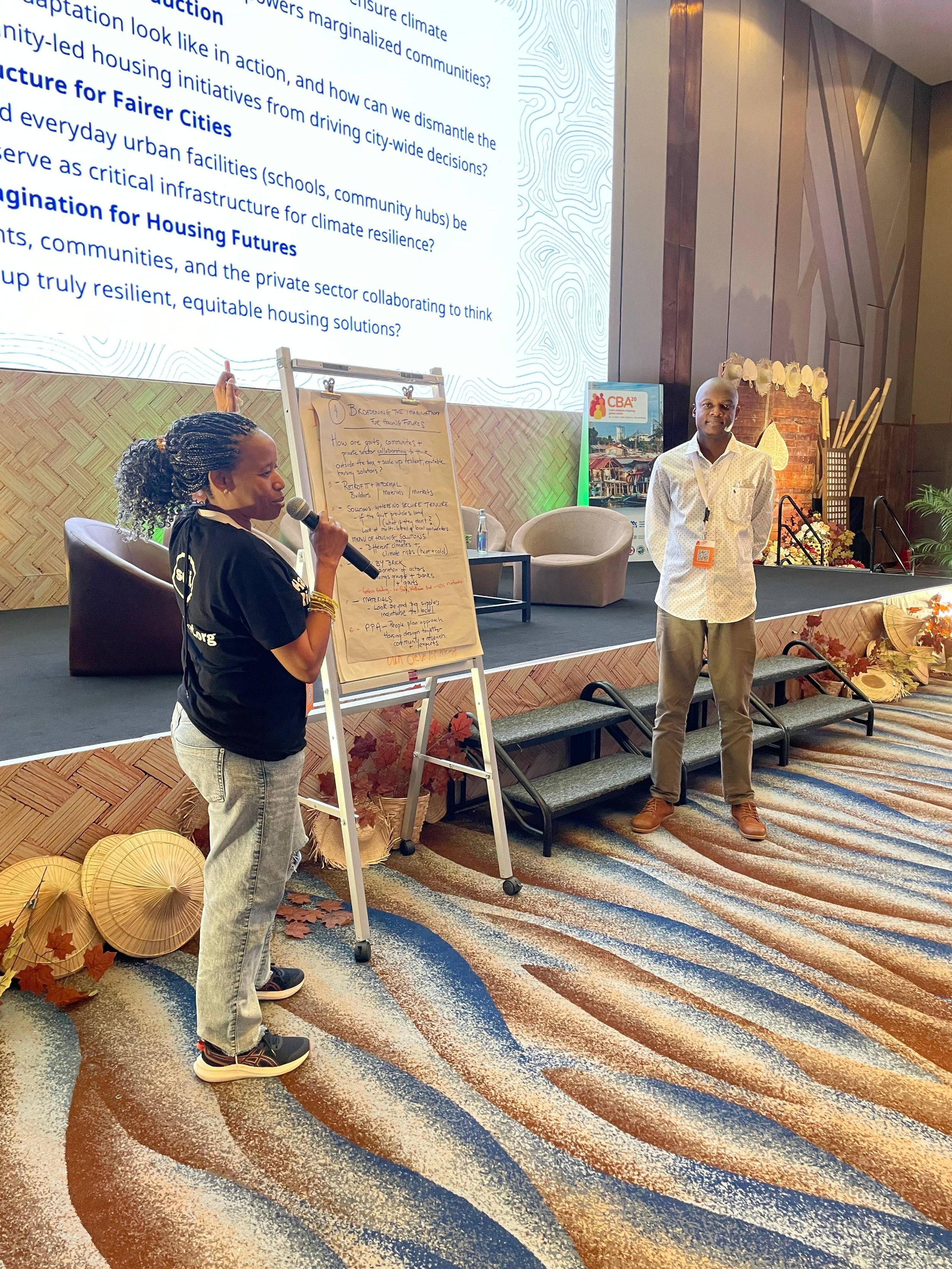
Tuwe Pamoja project partner, Slum Dwellers International (SDI) participated in the 20th International Conference on Community-Based Adaptation (CBA20), was held in Manila, Philippines in May 2026.
Bringing together practitioners, researchers, policymakers, and community leaders from across the Global South, CBA20 was an opportunity to share knowledge, evidence, and innovations on locally led climate adaptation.
For SDI project manager and Tuwe Pamoja SDI Network lead, Dr Martha Sibanda, the conference went beyond a simple knowledge-gathering exercise. It was also a strategic opportunity to connect community-level practice with global policy conversations.
It was also an opportunity to look deeply into the Tuwe Pamoja project aims and how nature-based solutions (NbS) are discussed on a global scale.
“While nature-based solutions were one of the most discussed and debated themes across CBA20, it was clear that different contexts demand specific attention that cannot be generalised, yet most of the interventions are always at small scale leaving little or no impact,” said Sibanda.
Tuwe Pamoja and nature-based approaches
SDI and its partners participated in a CBA20 session focused on nature-based solutions, where activities from the Tuwe Pamoja project were highlighted. According to Sibanda, the session highlighted the need to scale locally led actions and ensure lessons from those activities are being used by decision makers locally and globally.
"My take home message from CBA20 is that projects like Tuwe Pamoja need continued support, in particular to resource scaling up to amplify locally led action,” Sibanda says.
“This will ensure that knowledge, innovations, and voices from informal settlement communities are not only heard at global platforms like CBA20 but are shaping the adaptation agenda from the ground up.”
For communities living in areas where SDI operates, Sibanda says climate risks like floods and extreme weather events are a constant reminder that slum upgrading is climate action. “Nature-based approaches are no longer peripheral interventions but central pillars of locally led adaptation, therefore there is need to scale the efforts,” she says.
As the next phase of Tuwe Pamoja begins, Sibanda notes there are still a number of deliverables to be implemented. The learnings from CBA20, however, will directly inform how the project and SDI in general strengthens its climate work.
“In particular, this will involve nature-based solutions documentation, peer-to-peer learning exchanges between Tuwe’s four foal cities, and positioning community-led climate data as a globally relevant and replicable model of locally led adaptation in action,” says Sibanda.