
Bridging research and design thinking for climate action
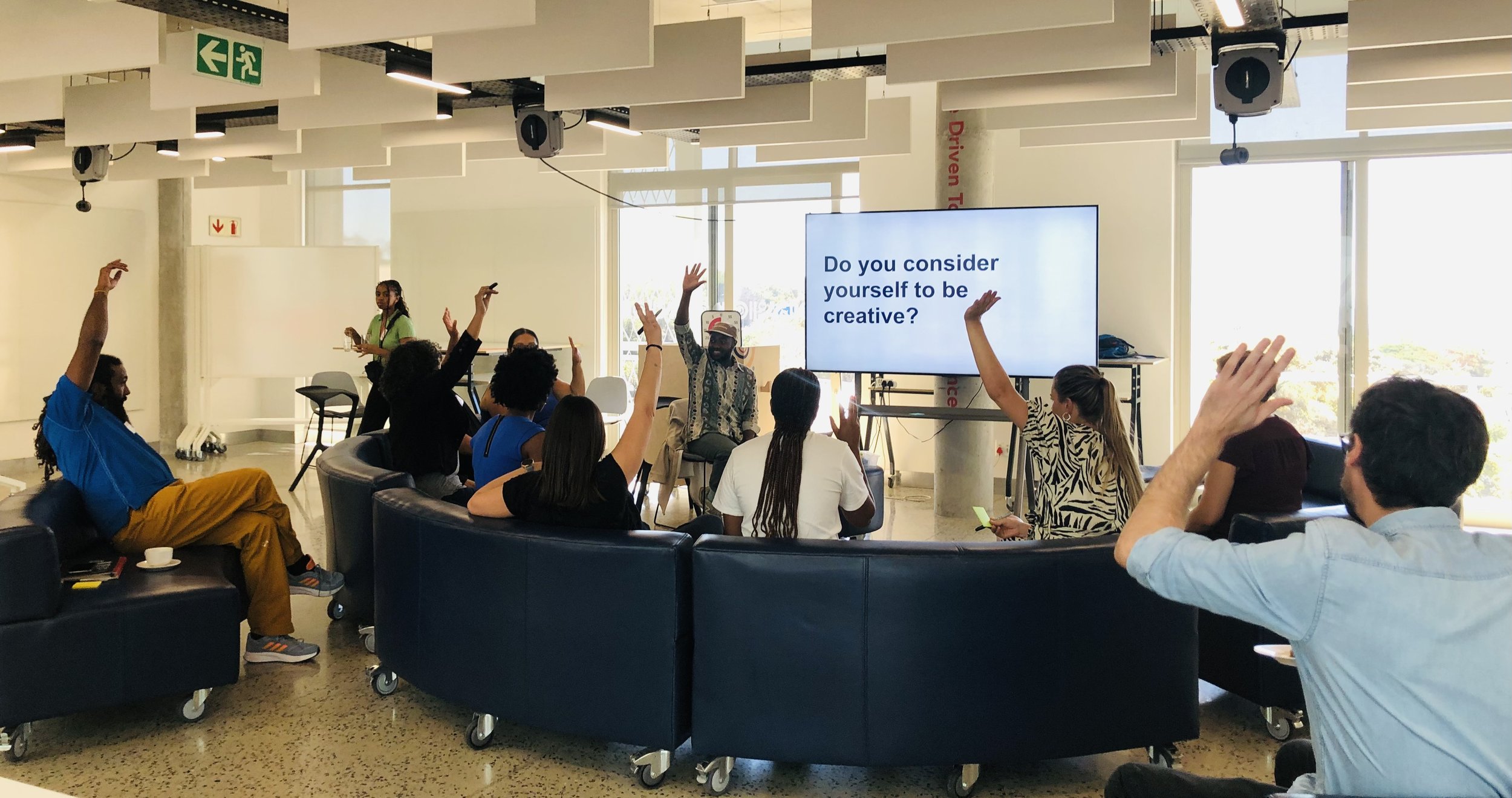
Perumal and colleagues hosted the Design for Climate Solutions (D4CS) pilot programme for climate practitioners from government, private sector, NGOs, consulting, and research organisations across South Africa.
Climate adaptation only works within the realities of specific places and people living through it. While research can help us identify effective responses to climate risks, turning those insights into action requires designing and implementing them in ways that respond to the local context.
This is especially relevant for nature-based solutions (NbS), which may need to address several objectives that have often been treated separately. One way to respond is through social innovation, and design thinking offers a valuable approach to support this process.
Design thinking gives individuals and teams a practical framework to translate knowledge into action, understand local priorities, involve communities in shaping solutions, and ensure that nature-based solutions reflect the realities of the people they're intended to benefit.
For Lavinia Perumal, a PhD candidate at the People in Nature and Climate (PiNC) Lab at the African Climate and Development Initiative (ACDI) at the University of Cape Town (UCT), this gap between knowledge and action is a growing research interest.
“It’s exciting because we are exploring new ways of approaching climate adaptation and resilience,” says Perumal, who is also a Design Thinking coach at the Hasso Plattner d-school Afrika.
A recent paper by Perumal and colleagues at ACDI, including its Director Gina Ziervogel and Anna Taylor, reflects on lessons learned from a pilot design thinking programme for climate practitioners.
“In this programme, we wanted to explore whether design thinking could create better conditions for collective problem-solving and more grounded responses to climate risks,” says Perumal.
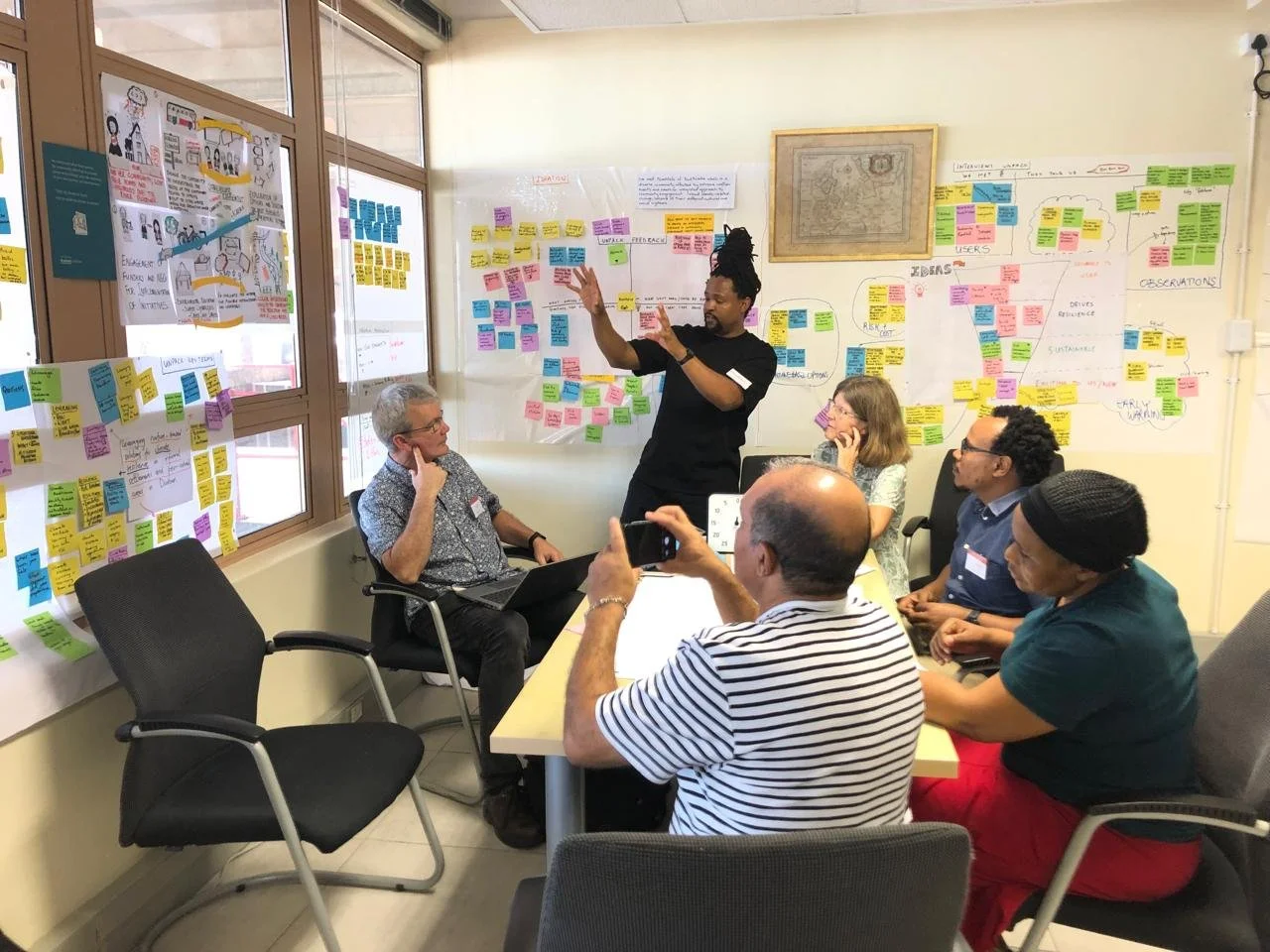
Participants of the D4CS pilot programme worked on a different climate-related challenge, spending time to understand how the different stakeholders experienced the challenge.
Co-designing climate solutions
Perumal and colleagues hosted the Design for Climate Solutions (D4CS) pilot programme for climate practitioners from government, private sector, NGOs, consulting, and research organisations across South Africa.
Each team worked on a different climate-related challenge, including urban farming and flooding in informal settlements. Rather than moving directly to solutions, teams spent time understanding how the different stakeholders experienced the challenge.
This approach often revealed assumptions and constraints that weren't obvious at the outset and changed how teams approached potential solutions, and design thinking gave teams a structure for moving from this early problem framing towards ideas they could develop and test.
The five-day pilot focused mainly on the early stages of this process. Each team was supported by a dedicated coach to help guide the process, challenge assumptions, and translate insights into practical ideas.
Building creative confidence
One of the valuable lessons learned was how participants approached familiar challenges differently. The process created space to question assumptions, explore new ideas, and think beyond the constraints of their day-to-day roles. For many, this confidence in their own creativity was an important takeaway.
The programme also encouraged participants to think more broadly about the challenges they were addressing. By engaging with different perspectives, teams were able to better understand how climate risks intersect with people's everyday needs and priorities. “The process nurtured an inclusive kind of collaboration,” Perumal says.
This was particularly valuable because many of the teams had not worked closely together before. Throughout the co-design process, participants had to discuss trade-offs, make decisions collectively, and draw on each other's knowledge and experience.
That diversity supported peer learning and helped create a shared sense of ownership over the process as well as the ideas they developed.
From research to implementation
Through her work as a Design Thinking coach, Perumal has seen first hand how it helps people build confidence to bridge the gap between research and implementation.
“Working in this kind of practice research space at ACDI and PiNC Lab, there’s a lot of engagement with different users to understand the problem, and co-design solutions,” she says.
But what happens after a promising idea emerges? “We often stop at the stage of understanding a problem or developing a concept, both of which are very important. But we need to figure out whether they can build it and find a realistic path forward,” says Perumal.
To support that, she is now turning her attention to the Climate Action Innovation Lab (CAILab), an emerging initiative anchored at ACDI. The lab aims to bring research, design and experimentation closer together, supporting climate actors as they move from defining a problem to testing ideas and exploring how those ideas might be used in practice.
Through a combination of research and open innovation approaches, CAILab aims to accelerate the development of inclusive, locally relevant, evidence-driven solutions to climate challenges, contributing to building climate resilience across South Africa and beyond.
“CAILab will look at how we can support underserved innovators or people with the potential to innovate. They don't necessarily have the idea, but they want to build something and they understand the problem,” Perumal says.